
Camping as modern therapy, part one: what the evidence says, and my first trip
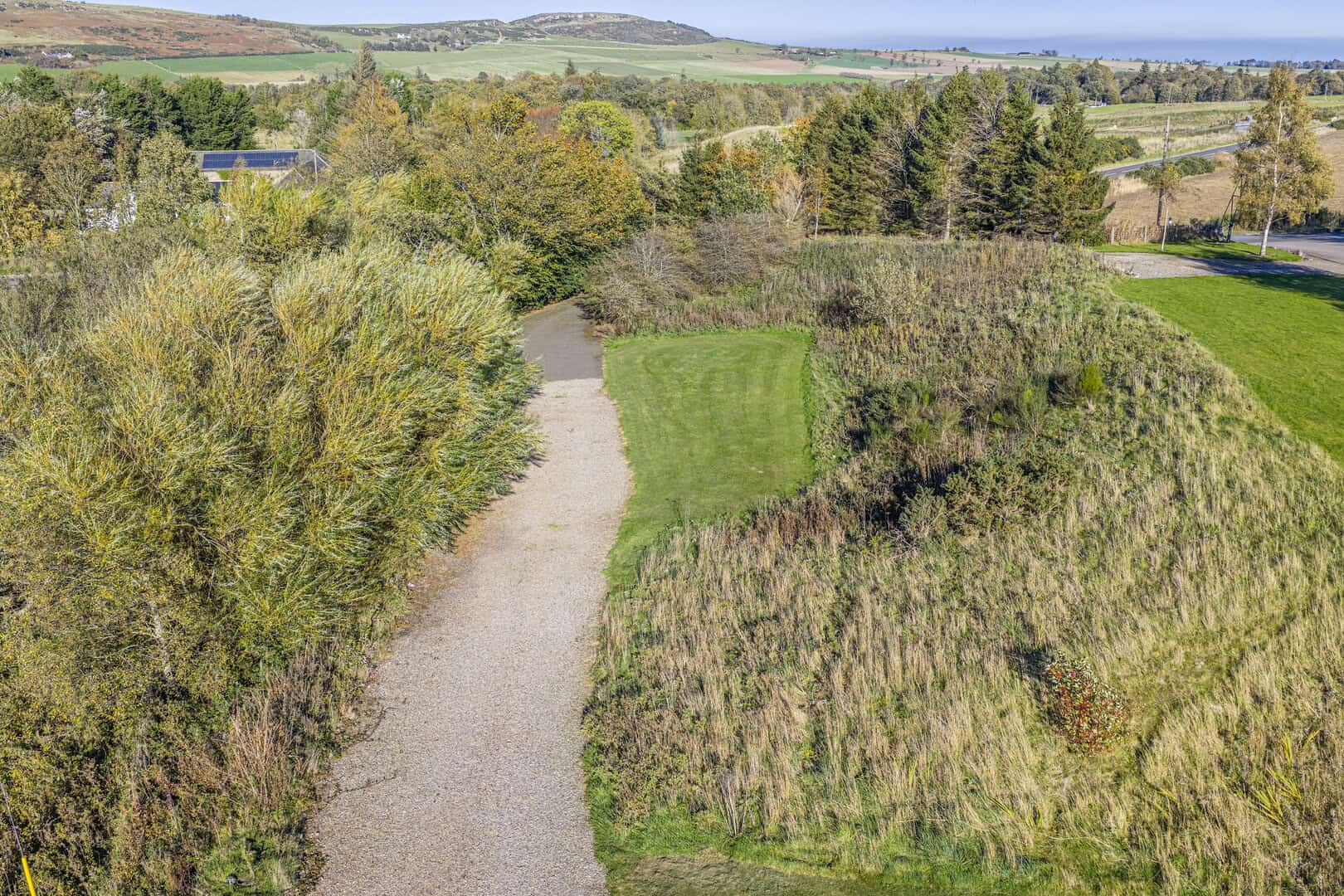
Somebody posted a line in September that I have not been able to shake: caravanning is a modern therapy. I shared it on, because I think it is true, and because I run a campsite for a living and had never once tried to say why.
So this is me trying. Part one is the evidence, which turns out to be better than I expected, and my own first trip, which is where I learned all of it without knowing. Part two, once I have the answers, is about the bits nobody puts in a brochure: what regulars know, and what is a pain.
I am going to say "camping" throughout, because the research is about camping in all its forms, tents, caravans, motorhomes and huts, and because that is what we do here. If you arrive in a motorhome and sleep on a mattress with a heater, you are still camping. It is here, anyway.
Camping and wellbeing: what the research actually says
Here's the thing. I assumed this would be a soft subject, the sort of thing people say because it sounds nice. It is not. There is a surprising amount of proper research, and it points one way.
Two hours a week outdoors is where it starts. A study of nearly twenty thousand people in England asked how much time they had spent in nature in the previous week, and then how they felt. The people who had spent at least two hours out of doors were more likely to say their health was good and their wellbeing high. Under two hours, no benefit showed up. And it did not matter whether the two hours came in one go or in a few short walks. That is a threshold, not a vague encouragement. A single night on a pitch here clears it by teatime.
A few nights without electric light moves your body clock back. This is the one that surprised me. Researchers sent a small group of people camping with no phones, no torches and no lights of any kind, just daylight and the fire. Under ordinary indoor life their internal night had been starting about two hours later than the sun's. After a week outside, the clock had moved back to match sunset and sunrise. People went to bed earlier and slept the same length. In winter the shift was bigger still, more than two and a half hours. And a weekend did much of the work: two nights outdoors were enough to stop the usual Saturday pattern of staying up late and lying in, the pattern Monday morning pays for.
I'll be honest, I read that twice. It means the thing we all notice, that you sleep like a stone on a campsite, is not just the fresh air. It is at least partly your body getting its own clock back.
Campers say they are happier. By a clear margin. A big survey asked nearly eleven thousand people, campers and non-campers, how their lives were going. Nearly half the campers said they felt happy almost every day. Among non-campers it was about a third. On a stricter measure of mental health, the one psychologists call flourishing, the gap was the same: well over four in ten campers against under a third of everyone else, and the more often people camped, the better they scored. Nine in ten campers go walking when they are away. Nearly nine in ten said one of the reasons they go is to take time out of everyday life.
Now, that survey was paid for by a camping club, so take the exact numbers lightly. But it was run by two universities, the sample was huge, and the direction matches the other work. People who camp feel better, and the reasons they give are the two the sleep and nature research already explains: being outside, and stepping out of the daily machine.
None of this needs a mountain. The nature study found most of the visits were within two miles of home, in ordinary green places. The body-clock studies were about light, not scenery, so a field at the edge of Forfar should do it as well as a glen.
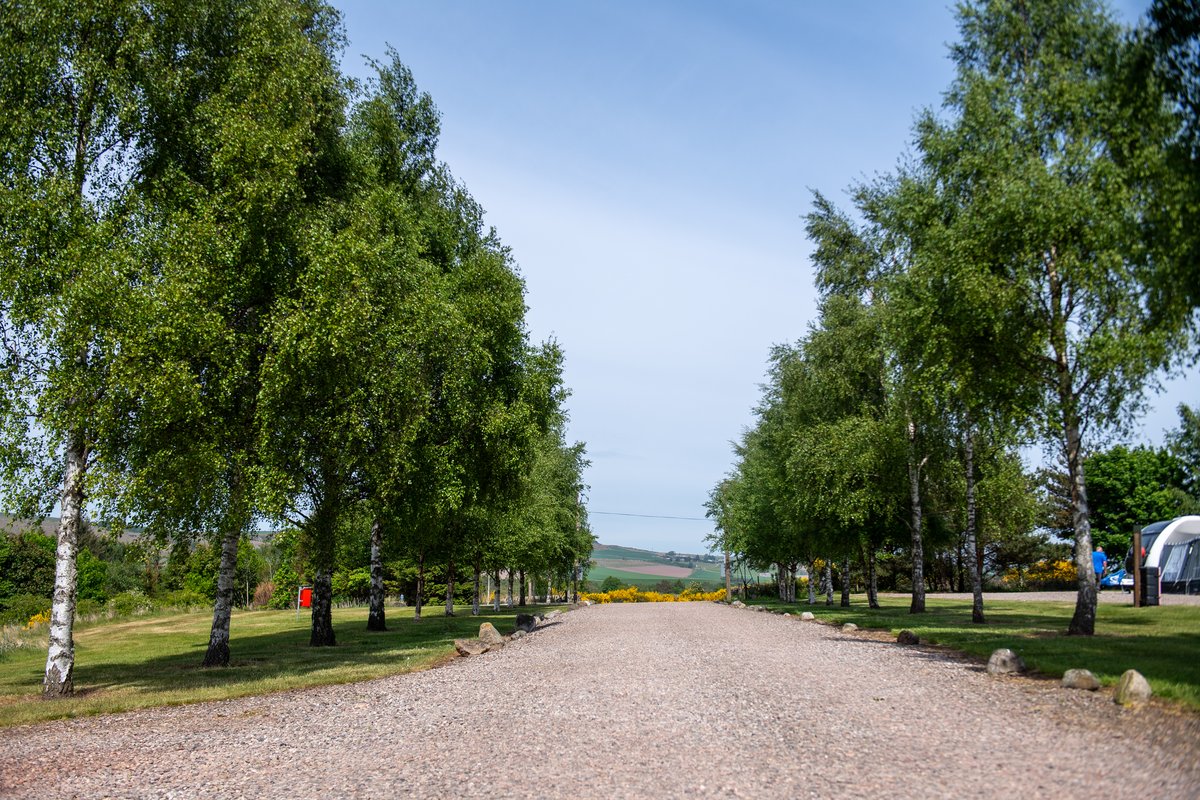
Why I believe it: Montrose, the summer the sun never set
I knew all of this before I had read a word of it, because of one trip.
My first ever caravan trip was to Montrose South Links Caravan Park, very close to the lovely Montrose beach. I went with a friend from school and their mum and dad. It was the peak of the summer holidays and, the way I remember it, the sun never set. The fair was in the area at the time as well.
We slept in the awning, on mattresses and sleeping bags, with loads of cushions that were far too big. We played a lot of snakes and ladders. We played a lot of Connect 4.
The shower block in the morning was an experience. Everyone knew everyone, and everyone formed an orderly queue. The showers were push-button to get the water out, and the pressure was not the best.
Packing up to go home was a marathon. The stuff we had brought would not fit into the bags we had brought it in.
That is the whole memory. Read it against the research and every line is there. Daylight until bedtime: the body clock. Hours outside without thinking of it as "time in nature": the two-hour threshold, cleared several times over. A queue where everyone knew everyone: the bit no brochure has ever managed to sell. And nothing to manage. A board game, a shower you had to push a button for, a bag that would not shut. The day was the size you could hold.
Nobody put push-button showers in a brochure. But they are the bit I remember, all these years on. That is not nostalgia. That is what the evidence says a few nights outdoors does to you.
What an adults-only campsite in Angus is for
I run Foresterseat on the strength of that trip, whether I knew it or not.
We started as a touring park: caravans, motorhomes, a few tents. The shepherd huts came later. Sinclair's Kitchen after that. We have grown slowly, done things right, and kept it small on purpose.
In 2025 we made the decision to go adults only. I'll be honest, I was nervous. We were already into the season, making a change like that. But here's the thing: sometimes you just know when something feels right. And it was our best year.
What going adults only bought is the thing the research keeps pointing at. Quiet after dark, which here means from ten at night until eight in the morning, and which you will actually sleep through. No schedule and no entertainment programme, so your day is your own and runs at your pace. Nature on the doorstep, not as a backdrop: walk out of the gate and you are in it, with Murton Nature Reserve ten minutes away on foot. And a place kept immaculate, which guests mention in every review, because a clean shower block with underfloor heating is the difference between camping in October and enduring it.
It is a park built to deliver the two hours, the dark nights and the time out of everyday life. The evidence just gave me the words for it. The guests had them already. "This is our happy place," one guest wrote. Another, back after we went adults only: "It's even better now, properly peaceful."
Camping near Forfar: what arriving here is like
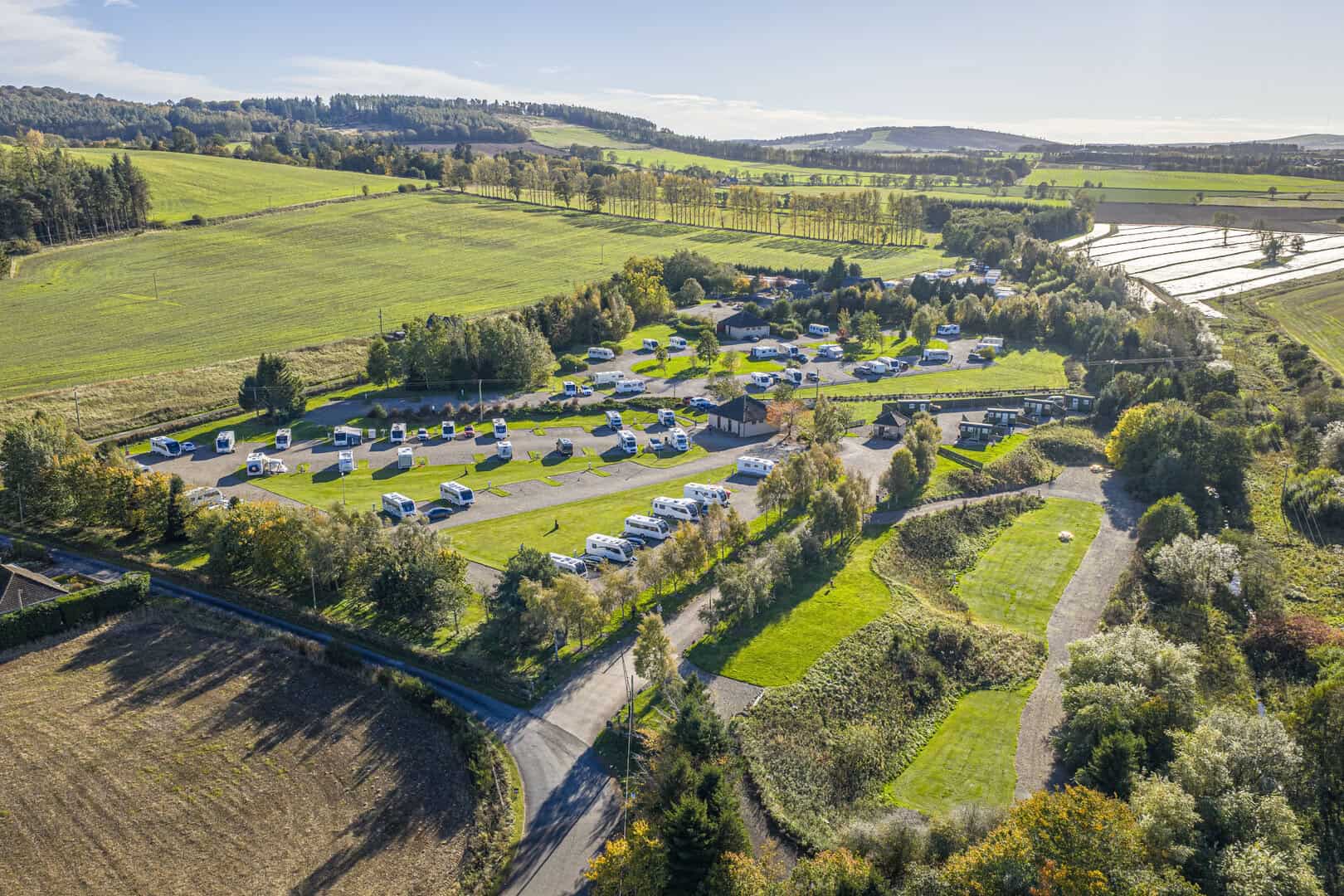
A lot of you do the same thing on arrival, especially if you have not been before. You pull onto a level pitch with a view and sit for a minute. You go and explore the facility block (five star, and I will stand by that). Then you take a stroll over to Sinclair's for a refreshment, or to book a table for the night. That is the two hours outdoors started, the day cut down to size, and the evening sorted, inside your first hour.
From September the midges give up, the owls in the oak have the place to themselves after dark, and the touring field thins out once the school holidays end, so you get considerably more of the place to yourself. Lights off and phone away after dark, mind, or none of the above counts. The practical bits, so you do not need to ask:
- Touring and camping pitches arrive and leave at 12 noon; the huts arrive after 3pm, leave by 10am.
- Choose a fully serviced hard-standing pitch, a grass pitch with hook-up, or a tent pitch; there is a heated shower block with underfloor heating.
- Dogs are welcome on the pitches, and stay free in two of the five huts, CLOVA and WALLIS.
- Sinclair's Kitchen is on site and run by Sinclair's, not by us, so book a table with them on 01307 818080.
- We close for the winter on Sunday 1 November and open again on Friday 26 March 2027. Any 2027 pitch booked online before 30 November is 20% off with the code EARLY20, pitches only, online only.
Part two: the bits nobody puts in a brochure
That is the evidence, and that is my trip. Part two is the other half, and I would rather write it with you than guess:
1. The thing about camping that is a pain, and I would never pretend otherwise.
2. What regulars know that first-timers don't.
3. Your own first trip, if you have one worth telling.
If you have an answer to any of those, tell me in the comments, or next time you are in.
Emma x